Fixing a Power Outage, Fast
Power gone at your place is either a quick answer or a genuine hazard, and the difference matters before you touch anything. Most single-house outages trace back to your own switchboard or wiring, not the street.
A whole-street blackout is a different problem entirely, and not one we can do anything about until the network operator restores supply.
If you can smell burning or see scorch marks near the board, skip ahead and call (02) 9538 7444 now.
Should You Worry? An Honest Answer
A power outage on its own usually isn't dangerous. It's inconvenient, but electricity that has stopped flowing can't shock or burn anyone.
The danger sits in what caused it. Get us on the phone quickly if the outage arrived with a burning smell, a hot switchboard, visible sparking, or scorch marks around any switch or point.
Repeated tripping that won't hold, even with nothing plugged in, is also worth an urgent call. That pattern points to a fault in the wiring itself, not an overloaded circuit.
A clean, one-off outage with no smell, heat or damage can usually wait for a normal booking.
Trust your nose over your eyes here. A burning smell shows up before visible damage does most of the time, so it's the earliest reliable warning sign you'll get.
Six Causes, From Common to Rare
Work through these before assuming the worst:
- A tripped main switch or RCD. One large fault or surge has cut the whole board.
- A blown fuse on an older board. Ceramic-fuse switchboards fail circuit by circuit, not as a whole.
- A network outage. A fault on the street-side supply, outside your switchboard and outside our scope.
- A loose or failed connection. Heat and vibration loosen terminals over years, cutting a circuit.
- An overloaded circuit. One line carrying more appliances than it should trips the protection by design.
- Storm or wind damage. A fallen branch or damaged line, more common near bushland and tree cover.
What To Do Right Now
- Check your neighbours. Lights on next door means the fault is at your place, not the street.
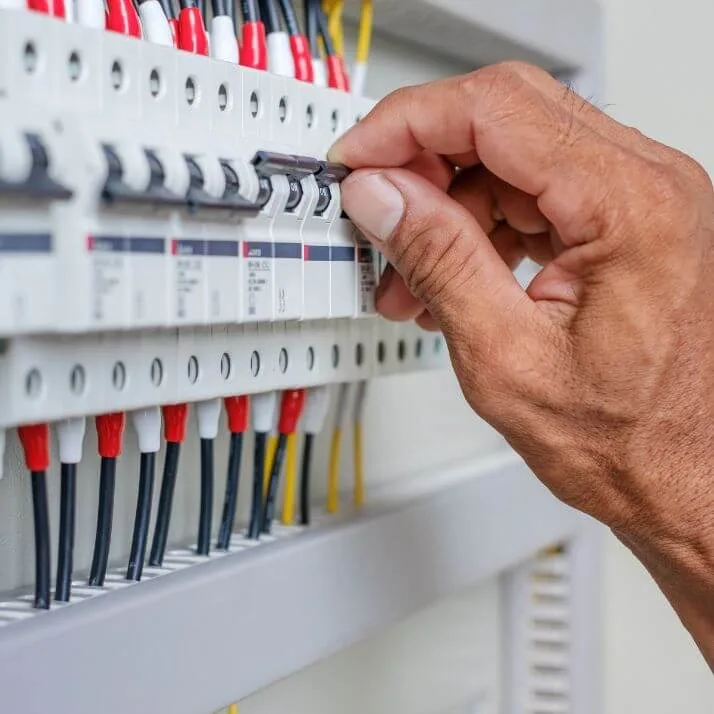
- Look at your switchboard. A tripped switch sitting between "on" and "off" is worth one reset attempt.
- Leave it off if it won't hold. A switch that trips again immediately has a real fault behind it.
- Call us for anything beyond a simple reset, especially with any smell, heat or sparking involved.
What a Power Outage Actually Means
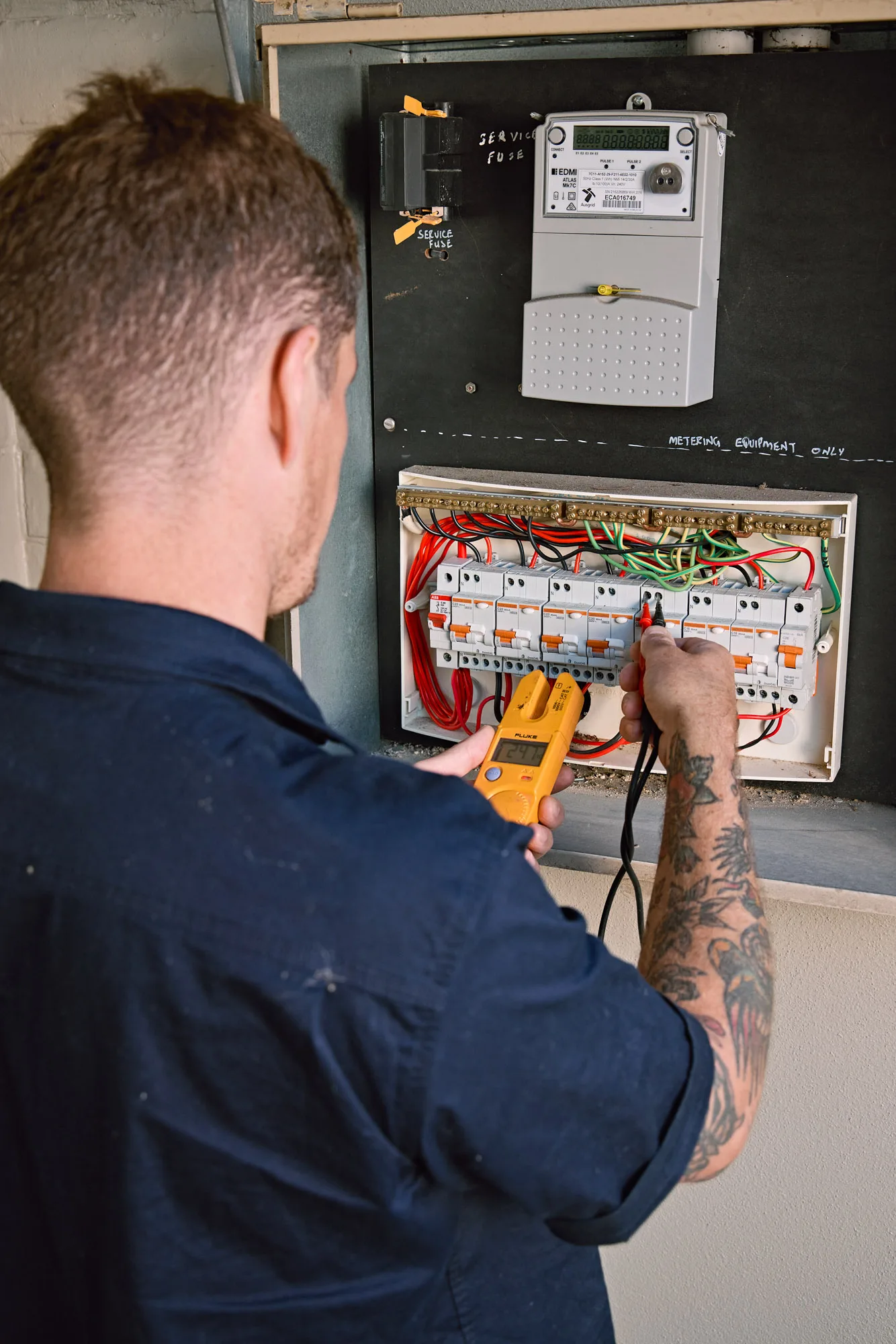
Power to a home runs through one path: the street supply, into your switchboard, out along individual circuits to each room. A break anywhere on that path cuts everything downstream of it.
That's why the first useful question is always where the break sits. Whole street dark means it's upstream of your property, a network issue.
Only your house dark, with neighbours lit up, means the fault is somewhere between your switchboard and the wiring it feeds.
Partial outages tell their own story too. Losing power to one room or one side of the house usually means a single circuit has failed, not the whole board.
That's actually good news. A single dead circuit is a much smaller job than a full switchboard fault, and often a same-visit fix.
How We Fix and Certify the Repair
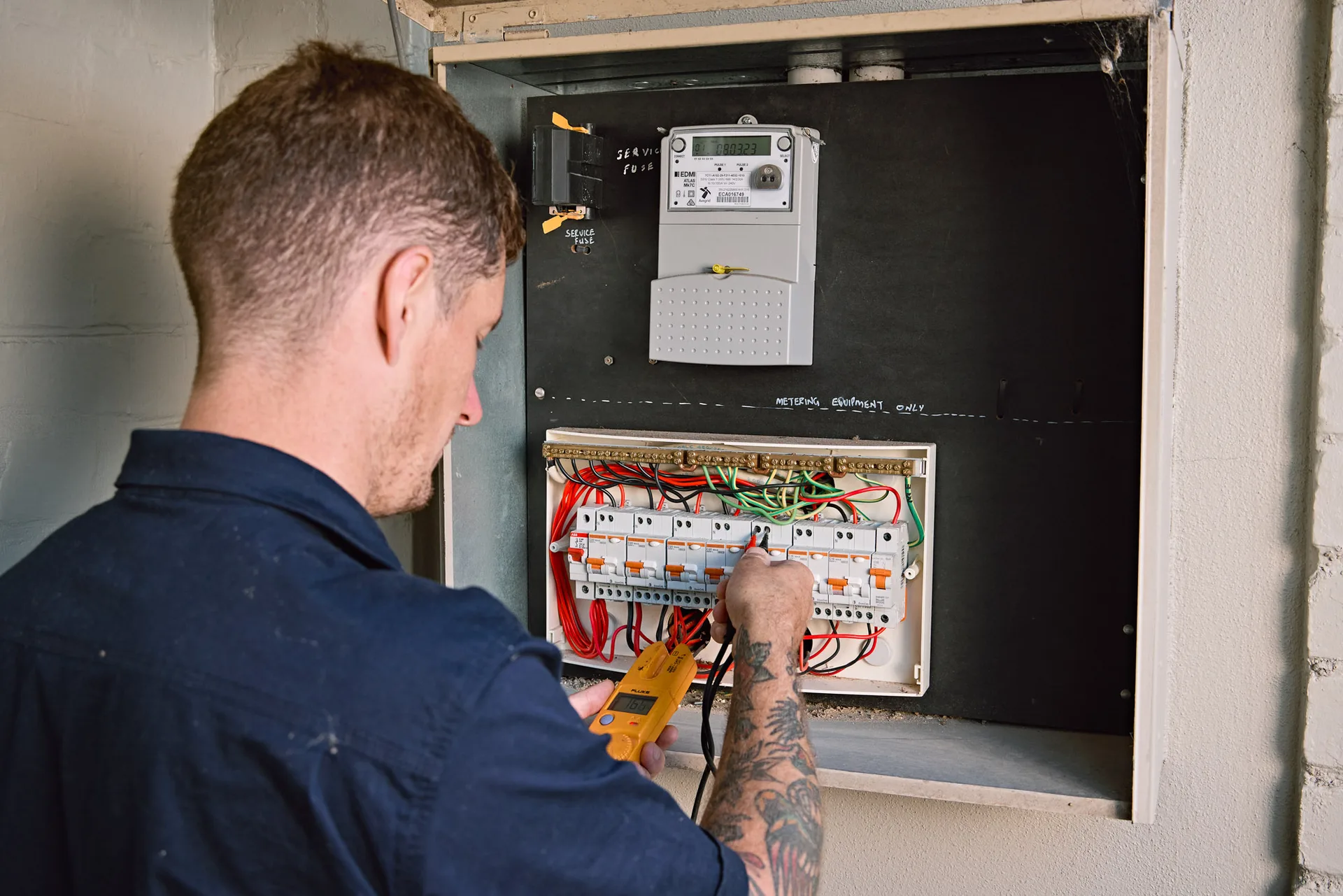
We start at the switchboard and test each circuit systematically rather than guessing which one failed. Thermal imaging picks up a connection that's running hot before it fails completely.
With the fault found, we shut that circuit off safely and repair or replace what's needed, from a loose terminal to a failed fuse or ageing wiring behind the wall.
Notifiable work carries a Certificate of Compliance registered through NSW Fair Trading, so there's a paper trail proving it was done to AS/NZS 3000.
You get a written, fixed price before any of that work starts.
The M1 Cut and What It Left Behind
Mount Colah's power reliability story has an unusual local wrinkle. When the Pacific Motorway was built through the area in 1988-1989, it reshaped more than just the road network, cutting across established infrastructure corridors on its way through.
Homes built in the infill years since, through the 1980s and 2000s, sit on sloping bushland lots that can mean longer circuit runs from the switchboard to the far end of the house.
Longer runs are more prone to a loose connection developing somewhere along the way, which is one more reason a single-house outage here is worth a proper diagnostic rather than a guess.
How to Stop It Happening Again
A few upgrades cut outage risk at the source rather than waiting for the next one:
- Safety switches on every circuit. A fault trips one circuit instead of the whole board.
- A switchboard upgrade. Trades tired ceramic fuses for modern breakers that respond faster and fail less. See our switchboard upgrades page.
- Fault-finding before symptoms turn serious. Thermal imaging catches an overheating terminal well before it fails outright.
- Spreading heavy loads across more circuits. Stops one line carrying more than it should long-term.
- Regular electrical repairs on older wiring. Catches loose terminals and degrading insulation early, covered on our electrical repairs page.
Other Faults We Chase Down
A power outage sometimes travels with other symptoms worth knowing about. If your lights dim or flutter before the power drops, that's covered under lights that won't hold steady.
A breaker that trips over and over without a full outage is its own pattern, set out under a breaker that keeps dropping. Any burning-plastic smell alongside an outage should send you straight to that burning smell guidance for the urgent steps.
We also work Asquith, Hornsby and Berowra on a normal week, alongside Mount Colah itself.

Call Us Today, We Will Sort It
An outage shut inside your property will not clear on its own, and the cause matters more than the inconvenience. Call (02) 9538 7444 and we'll talk through what you're seeing, then get someone out to trace the fault properly.
Common questions
Common Power Outage FAQs
Quick answers to what people usually ask us when the power drops.
How do I know if the outage is just my house?
Check whether your neighbours still have lights and power. If the whole street is dark, it's a network fault outside our scope. If it's only your place, it's almost always your switchboard, wiring or a specific circuit.
Is a power outage ever an emergency?
Yes, if it comes with a burning smell, visible sparking, a hot switchboard or scorch marks. Ring us straight away in that case rather than waiting to see if power returns on its own.
Does a safety switch help during an outage?
A safety switch protects you from shock while the power is on, but it won't cause or fix an outage. If your switchboard still runs old ceramic fuses instead of safety switches, that's worth raising when we're out.
Should I turn everything off at the wall while the power is out?
It's a sensible habit, yes. Switching off sensitive appliances stops a surge from damaging them the moment power is restored, whether that's the network coming back or us fixing your circuit.
Can a power outage damage my appliances?
The outage itself usually doesn't, but the return of power can, especially if it comes back as a surge rather than a clean restart. Unplugging anything expensive or sensitive is cheap insurance.
How fast can you get to a power outage in Mount Colah?
For a fault confined to your property, we're often able to get out same or next day. If anything is hot, smoking or sparking, flag it on the call and we'll treat it as urgent.