Mount Colah House Rewiring, Done Properly
Old wiring doesn't announce itself until it fails, and by then you're choosing between a proper fix and another patch job. House rewiring gets ahead of that.
We rewire homes across Mount Colah to current standards, on a fixed written price agreed before anything gets opened up.
Call (02) 9538 7444 to talk through your home's wiring and what a rewire would actually involve.
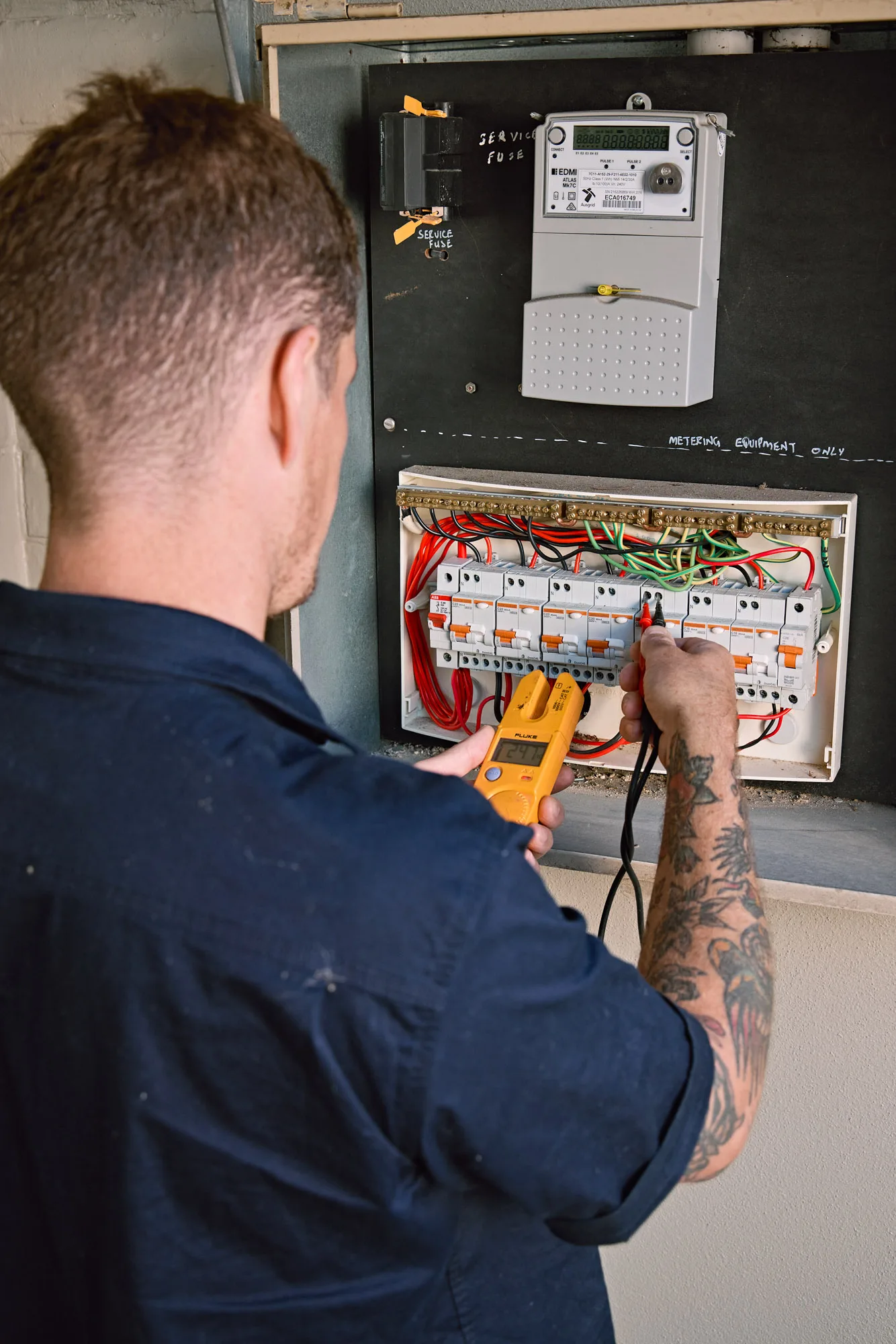
Signs You Need House Rewiring
A house doesn't need rewiring just because it's old. It needs rewiring when the wiring itself is genuinely failing to keep up.
- Circuits trip repeatedly with no obvious appliance cause.
- The switchboard is original and can't take the extra circuits a renovation needs.
- Wiring is still the old fabric-insulated or rubber-sheathed type rather than modern PVC.
- Power points and light switches feel warm or discoloured for no clear reason.
- You've had multiple call-outs for faults that keep reappearing in different spots.
- An insurer or building inspector has flagged the wiring during a sale or renovation.
If a couple of these sound familiar, a proper assessment beats guessing. Not sure whether it's a patch job or a full replacement, our electrical repairs team can tell you which.

House Rewiring: What We Actually Do
A rewire isn't one job, it's a full replacement of the circuits that carry power through your home.
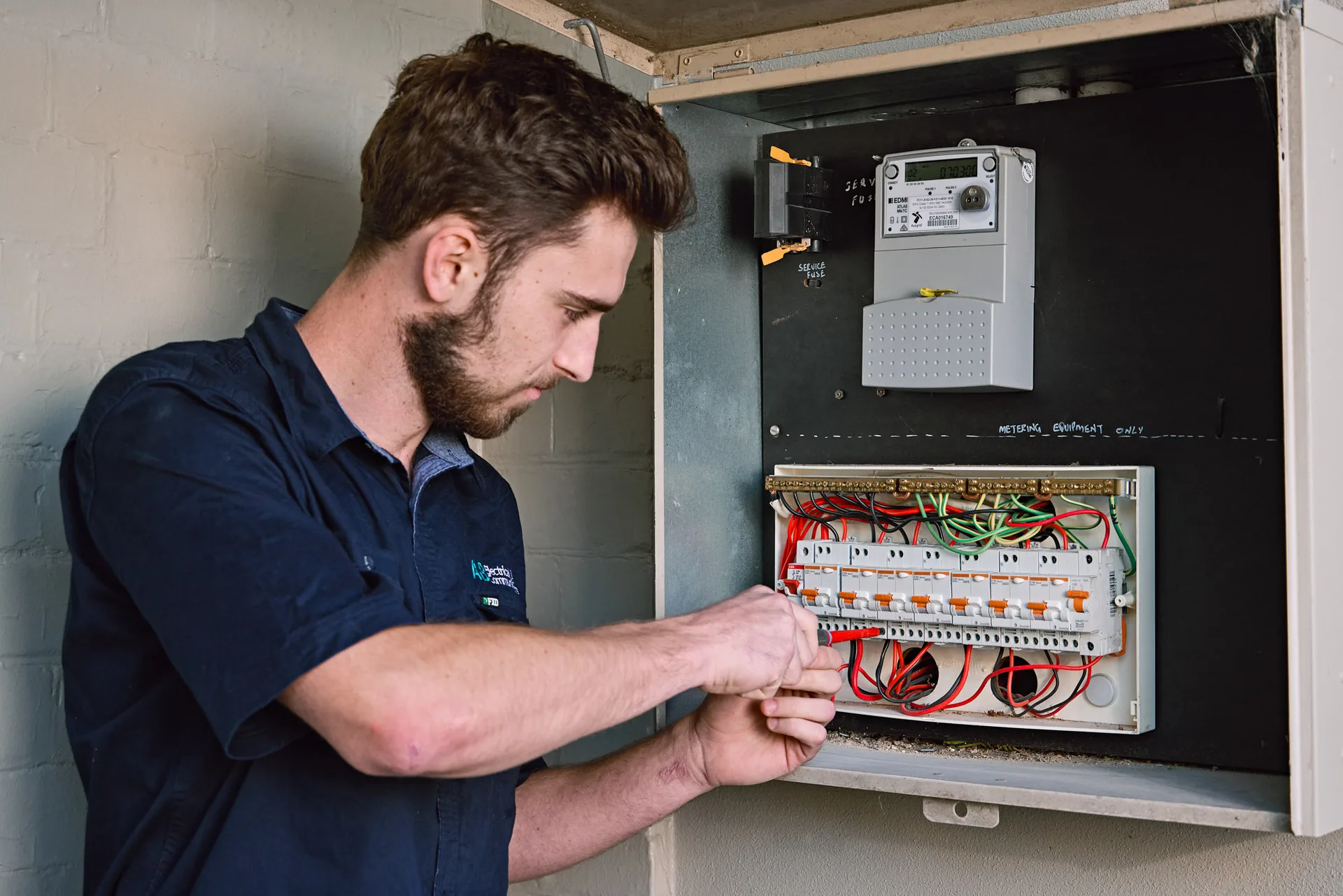
Full house rewiring covers every circuit, from the switchboard through to the last outlet, replaced and tested to current standard.
Partial rewiring targets specific circuits or areas, common where one section of a house is original and the rest has already been done.
Switchboard integration ties the new wiring back to a compliant board, with an RCD protecting every circuit, often bundled with the rewire itself.
Testing and sign-off confirms every circuit meets AS/NZS 3000 once the last cable is terminated.
Why Mount Colah Properties Call For This
A good share of the detached houses through here were built during the 1960s to 1980s wave, and plenty still carry sections of that original wiring behind the walls.
Ongoing renovations on these blocks are usually what surfaces the problem. Someone opens a wall to extend a kitchen or add a bathroom, and finds wiring that's degraded well past what a simple patch can fix.
Rather than repair around it, replacing the circuit properly gets it up to a standard that will outlast the next thirty years, not just this year's renovation.
Fibro homes need particular care here. The sheeting is brittle to cut into, and we plan the cable path before touching a wall rather than working it out as we go.
The Right Time to Book This, If You're Renovating
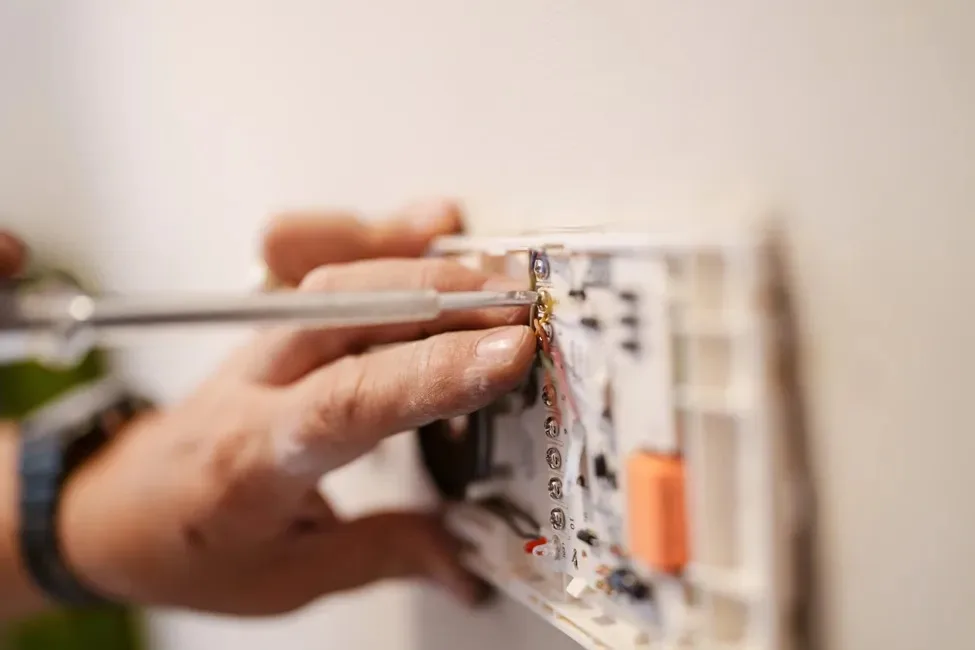
The best moment to rewire is before the plaster goes up, not after. Once walls are closed and floors are relaid, opening them again to fix a missed circuit costs far more than getting it right the first time.
If you're mid-renovation, tell us the full scope early. We'd rather plan every circuit against the final floor plan than come back for a second visit once the fit-out's finished.
What Your House Rewiring Quote Depends On
Every rewire is quoted after we've actually seen the house, never blind over the phone.
- The number of circuits and how much of the house needs replacing.
- Access. Underfloor and roof space that's easy to move through costs less than a tight, awkward cavity.
- The age and type of the existing wiring, since fabric-insulated cable takes longer to remove safely than modern PVC.
- Wall and ceiling material, brick veneer and fibro behave differently when we need to open them up.
- Any compliance rectification uncovered once we're actually inside the walls.
You'll always get the written price before work starts, with $50 off your first service if this is your first job with us.
Our House Rewiring Process, Start to Finish
- On-site assessment. We check existing wiring, the switchboard, and access before quoting.
- Fixed written quote. You approve the scope and price before anything is disconnected.
- Rewiring and testing. Circuits are replaced, safety switches fitted, and every circuit tested individually.
- Certification and handover. We lodge the compliance paperwork and walk you through the finished switchboard.
Most straightforward partial rewires run a day or two. A whole-house job on a typical block generally takes several days, since nothing gets rushed just to hit a shorter timeline.
Standards and Paperwork, Explained Simply
Rewiring is notifiable electrical work under NSW rules, so testing every circuit and lodging the paperwork isn't optional, it's part of the job.
We work to AS/NZS 3000, the wiring rules that govern how circuits, safety switches and earthing are installed in Australian homes.
Safety switches (RCDs) go on every circuit we touch, not just where the rules strictly require it. DIY electrical work is illegal in NSW for good reason, and a rewire is exactly the kind of job where that matters most.
Why This Is a Job for Our Team
Pulling new circuits through an existing house is unforgiving work. Get it wrong and the fault hides behind a wall for years.
One room or the whole house, every circuit goes through the same checks, and the finished job carries our lifetime workmanship guarantee against anything that traces back to it.
We're straight with you about scope before we start cutting into anything, so there's no surprise second invoice halfway through.
If something changes once we're inside the walls, say the original wiring runs further than expected, we stop, explain it, and re-quote before continuing. You're never billed for work you haven't approved.
Servicing Nearby Homes Too
We carry out house rewiring across Mount Colah and the wider Hornsby area, including Asquith, Hornsby, Berowra, Waitara and Normanhurst.
A rewire often lands alongside a board replaced through switchboard upgrades, or a new EV charger added while the circuits are already open.

Book Your House Rewiring Today
If your home's wiring is original, or a renovation has already exposed more than you bargained for, get it assessed properly.
Call (02) 9538 7444 and we'll book a time to look at what's actually behind your walls.
Common questions
Your House Rewiring FAQs
How do I know if my house actually needs rewiring?
Original wiring from the 1960s or 1970s, frequent trips with no clear cause, or a switchboard that can't take new circuits are the biggest signs. We'll assess it honestly on the day.
How long does a full rewire take?
It runs to several days on most houses rather than hours, because every circuit gets replaced and tested properly. We'll give you a realistic timeframe once we've seen the scope.
Can rewiring be done in stages instead of all at once?
Yes. Plenty of homeowners split it into partial stages around budget or a staged renovation, as long as each stage is planned so nothing gets left half-compliant.
Will you match my home's existing look, like cornice roses or skirting?
We work carefully around existing finishes and patch back where we've had to open a wall or ceiling, though full reinstatement of decorative trim isn't part of the electrical scope.
Do I need to move out during a rewire?
Not usually for a partial job. Whole-house work in an occupied home is more disruptive, and we'll walk you through what to expect room by room before we start.
Will I get paperwork proving the rewire is compliant?
Yes. A house rewire counts as notifiable work from start to finish, so every circuit gets tested and the compliance certificate goes to NSW Fair Trading before we hand back the keys.